


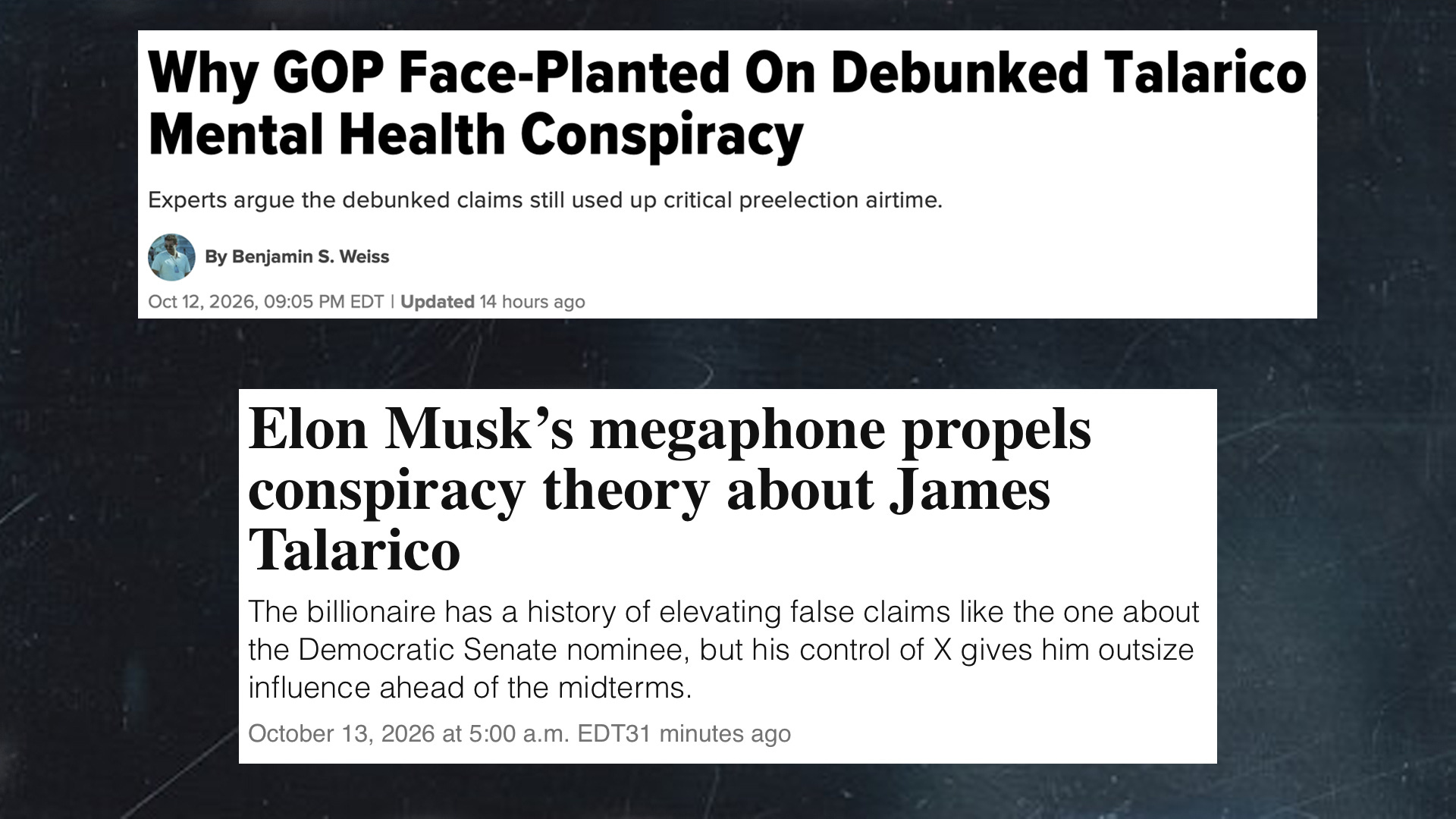
Two news outlets covering the spread of a quickly debunked conspiracy theory about James Talarico, a Democrat running for U.S. Senate in Texas, turned to Open Measures senior researcher Jared Holt to explain how the claims gained traction and what the episode signals about the online information landscape ahead of 2026 U.S. midterm elections.
HuffPost
HuffPost politics reporter Benjamin S. Weiss interviewed Holt for an Oct. 12 article on how easily disproven conspiracy theories about Talarico spread so quickly online. Holt explained that even though the claims were swiftly debunked, they still served a larger purpose: hijacking the conversation around a high-profile race in the final weeks before Election Day.
“Talarico, for the three weeks of the campaign, is answering questions about having the flu instead of his policies,” he said. “It throws chaos into the situation — they can force everyone to react to it, even if it’s complete nonsense … even if it embarrasses them. It gets their opponents off message.”
Holt also discussed the incentives that drive hyperpartisan social media influencers to push conspiracy theories to their audiences:
Animating many of those wild conspiracies, which blow up and fizzle quickly, is a media ecosystem which rewards “independent journalists” who are open about their true status as political operatives, Holt explained.
“It’s a lot of people who want to arrive at a certain endpoint,” he said. “They are willing to propel themselves through some of the most laughable, ridiculous hoops to get there.”
In the case of Talarico’s debunked visit to an Ohio medical facility, Holt argued commentators boosting those claims had long suggested that his absence from the campaign trail was a sign of an ulterior motive.
“They had this feeling that something was off, and that people should be concerned about this guy the way they’re concerned about this guy,” he said. “Here they have this anecdote that claims to be like an explosive confirmation of those feelings, so they latch onto it.”
The Washington Post
Holt also spoke with Washington Post reporter Emily Kennard for an Oct. 13 article examining billionaire Elon Musk’s role in amplifying the false claims about Talarico:
Jared Holt, a senior researcher at Open Measures, a platform that measures the spread of online extremism and disinformation, said Musk’s elevation helped claims like [Nick] Sortor’s proliferate.
“His engagement with posts promoting the claims did boost them to wider audiences than they may have reached otherwise and likely served to legitimize them in the eyes of ideologically aligned users,” Holt said in an email.
This kind of public attention can prove dangerous for ordinary figures suddenly lifted to the center of public fascination, he added. “The ecosystem where these claims spread has regularly elicited threats to schools, medical facilities, election offices, courts, and private businesses,” Holt said.